Many common assumptions about subwoofers are incorrect, leading to designs that limit system performance.
Low-frequency energy is naturally omnidirectional, but arrays can shape bass where needed and reduce it where it isn’t.
Subwoofers aren’t about loudness, they restore missing low end for fuller, more natural sound at any volume.
Modern compact subs like the MB210-WR can deliver tight, musical bass in spaces where larger enclosures won’t fit.
Better low-frequency design enables more consistent, immersive coverage in retail, hospitality, worship, and performance environments.
Subwoofers behave differently than most loudspeakers — and that’s exactly why they’re so often misunderstood. From placement and coverage patterns to assumptions about when and where they’re actually needed, subwoofers are surrounded by persistent myths that can limit performance.
The truth is, utilizing a subwoofer in the right way can transform a system. In this article, we unpack five common commercial subwoofer myths and explore how addressing them can lead to better coverage, improved clarity, and a more immersive experience in any space.
Whether you’re working in a performance venue, retail space, house of worship, or hospitality environment, rethinking low-frequency design can help you achieve fuller, more even coverage and a more natural listening experience.
Truth #1 : A single subwoofer is omnidirectional — but when used together, subs can be steered.
Myth #1 : “Subwoofers are directional — you have to aim them at the audience.”
This is one of the most common (and persistent) myths. People often treat subwoofers the same as point-source loudspeakers, thinking they need to be aimed toward the audience. But at low frequencies, sound waves behave differently. Below about 100 Hz, the wavelength is so long that the energy radiates in all directions.
This omnidirectional behavior is true for a single subwoofer in isolation. But with multiple subs working together, system designers can shape that low-frequency energy and control where it goes — and where it doesn’t.
By adjusting placement, polarity, and time alignment, subs can be configured to:
Cancel rearward energy (cardioid arrays, often used to reduce feedback from stage mics)
Deliver more even bass coverage across the audience area (especially in long or wide rooms)
Prevent low-frequency spill into unwanted zones like reflective walls or neighboring properties
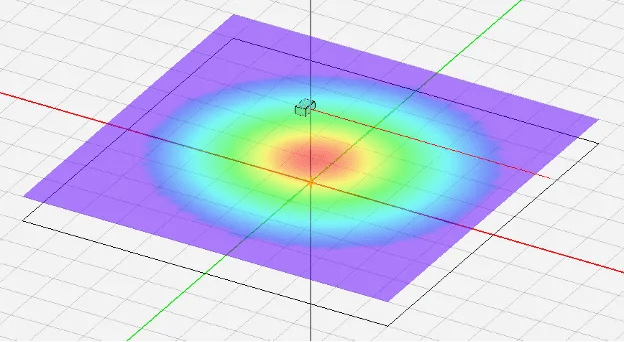
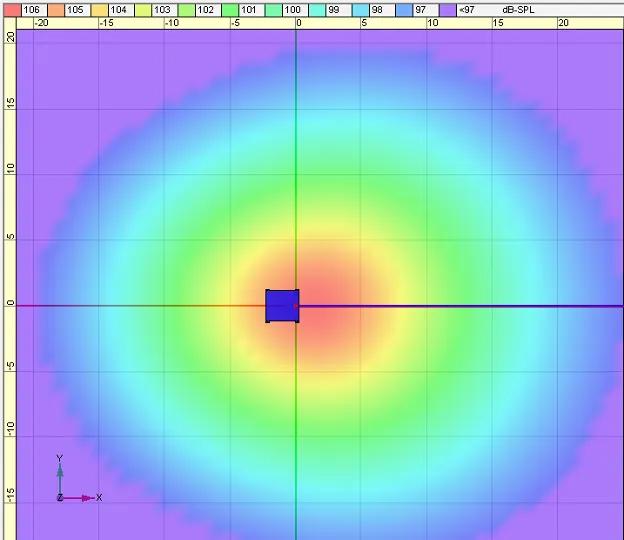
A single subwoofer radiates low-frequency energy equally in all directions. Aiming it forward has little effect on coverage.
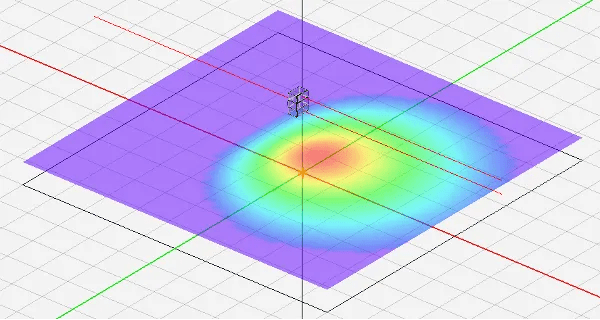
A basic cardioid subwoofer array cancels rearward energy, reducing stage bleed and improving gain-before-feedback.
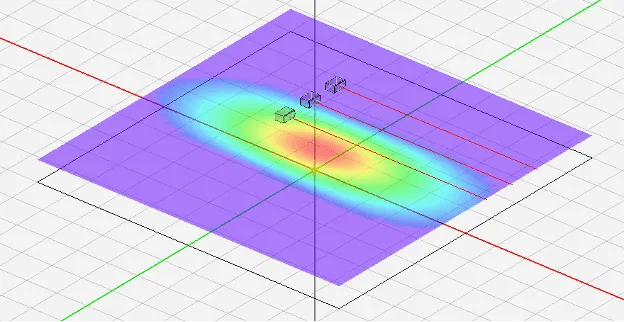
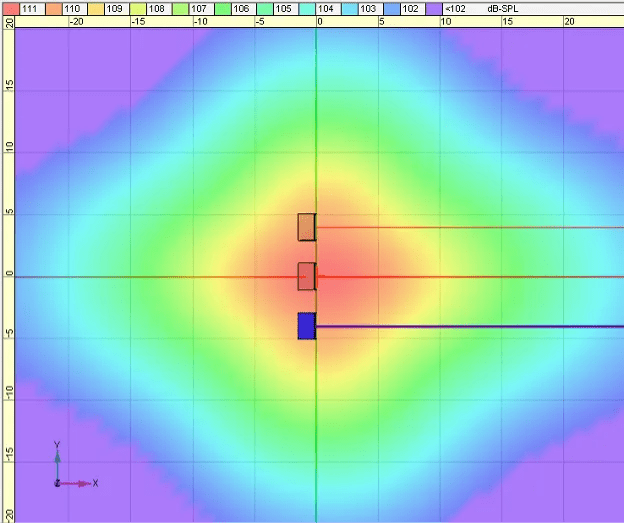
A broadside sub array without delays creates a focused beam of low-frequency energy.
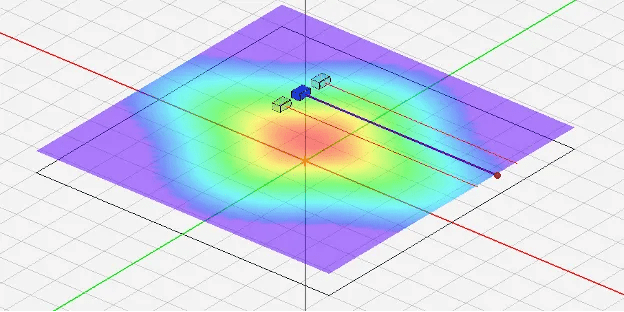
Adding time alignment to broadside sub arrays spreads energy more evenly across the audience while reducing hotspots.
Truth #2 : Subwoofers add fullness and realism — even when volume is low.
Myth #2 : “You only need a sub if you want to feel the bass.”
It’s easy to associate subs with that deep, chest-thumping impact we feel at concerts and clubs. But low-frequency support isn’t only about visceral punch. It’s also about extension: the ability to reproduce the full frequency spectrum of music and speech, especially the lowest octaves.
In background music systems, for example, this extra low-frequency content is often missing. Smaller full-range speakers may only reach 60 Hz or higher — leaving a gap that makes music sound thin or artificial.
A subwoofer restores that missing warmth. Even at modest listening levels, it adds depth and presence that makes the music feel natural.
It’s like the difference between hearing music on a small tabletop radio versus a well-tuned hi-fi system. Even at the same volume, one feels noticeably richer and more complete.
Truth #3 : Modern subwoofers can be compact, discreet, and creatively installed.
Myth #3 : “I don’t have space for a subwoofer.”
Another common misconception is that commercial subwoofers are too large or visually intrusive to include in retail stores, restaurants, or multi-use venues. But today’s subs come in much smaller packages — with far more flexible mounting options.
Compact models like the MB210-WR can be:
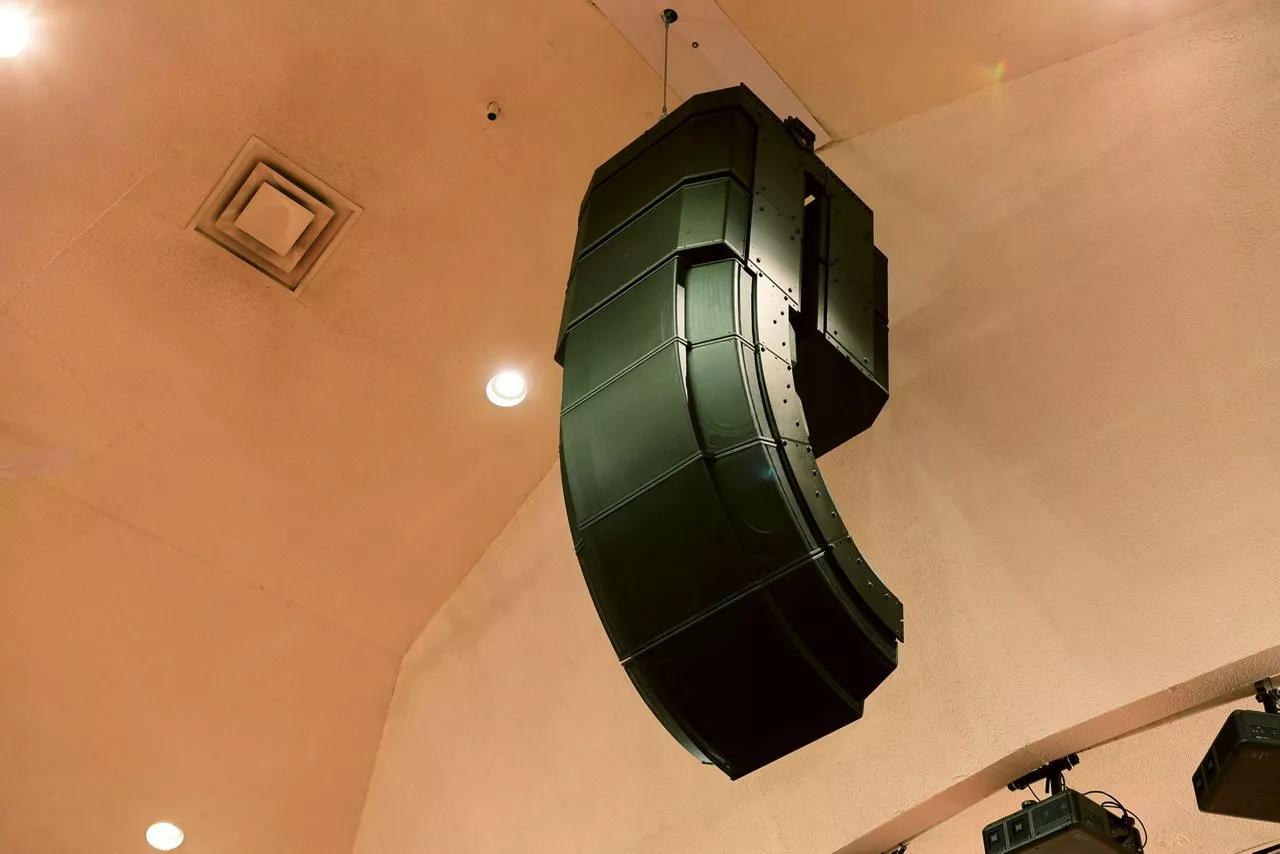
Ceiling-mounted, wall-mounted, or suspended using yoke brackets
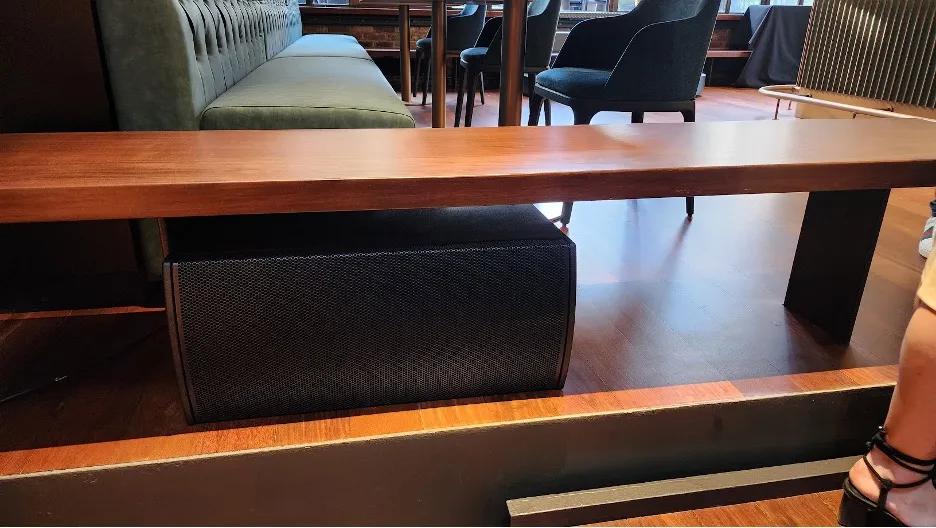
Tucked under furniture, integrated into millwork, or hidden behind panels
Installed outdoors in bushes or stanchions (IP55-rated for use in demanding environments)
A smartly designed low-profile sub can go virtually anywhere. Whether mounted above a ceiling grid or beneath a stage, subs no longer require dedicated floor space to make a big impact.
Truth #4 : Driver size alone doesn’t determine performance.
Myth #4 : “Smaller subs can’t deliver big results.”
The idea that only large-diameter drivers (like 15-inch or 18-inch) can produce deep bass is outdated. In many applications, dual 10-inch drivers offer a tighter, more musical response that integrates better with mid-sized mains.
Compared to larger subs, these smaller format designs often produce:
Cleaner, more defined low end (ideal for music playback and voice clarity)
Smaller enclosures with easier placement
Less risk of overloading the space with muddy energy
One large corner sub results in uneven SPL.
A horizontal array of small-format subs can deliver balanced low-frequency coverage across the room, avoiding the hotspots common with a single large-format subwoofer.
Truth #5 : Any space that plays music can benefit from low-frequency support.
Myth #5 : “I don’t need a sub because this system isn’t for a rock show.”
Not every system is designed for high-energy concerts. But whether it’s a retail boutique, fitness studio, church, or hotel lounge, subwoofers help deliver a more balanced and enjoyable experience.
Integrators often encounter resistance when a client assumes subs are only for high-volume environments. But subwoofers do more than add volume; they add credibility to the sound. They make it feel intentional, rich, and appropriately scaled to the room.
Designers who ask the right questions early in the process can uncover future use cases that justify a sub:
Will this space ever host events or DJs?
Will you play music that needs to feel immersive or energetic?
Will people expect a premium experience here?
Adding a sub isn’t overkill — it’s futureproofing. And with the right choice, it doesn’t have to break the budget or disrupt the aesthetics.
A smarter way to think about commercial subwoofers
Subwoofers don’t have to be big, expensive, or overpowering. They don’t have to dominate the design or be added as an afterthought. And they certainly don’t only belong in clubs or stadiums.
That’s why we developed the MB210-WR — to address the real-world challenges that often prevent subwoofers from being included in system designs. It’s compact enough to tuck into ceilings, walls, or tight architectural spaces. It ships with a yoke bracket for easy mounting. An IP55 rating ensures long-term reliability in both indoor and outdoor applications.
And because it uses dual 10-inch drivers, the MB210-WR delivers tight, musical low end without overwhelming the space. It integrates smoothly with small and mid-sized systems and can be deployed as a single unit or in arrays to steer low-frequency energy just where you want it. From improving coverage to extending frequency response or simply adding warmth to the mix, it’s a versatile tool that addresses the most common subwoofer design challenges.
If you’re designing a new system or upgrading an existing one, a well-placed sub can make the difference between good sound and great sound.