Long before installed sound became a defined category — before system design workflows were standardized and before loudspeakers were expected to operate reliably for decades — there was the Bose 802.
Introduced in the late 1970s, the Bose 802 wasn’t simply another professional loudspeaker. It represented a different way of thinking about sound reinforcement, shaped by how systems behave in real spaces over long periods of time. Its influence would extend across houses of worship, hospitality venues, outdoor installations, and performance spaces, helping establish expectations that still guide professional audio today.
This is the story of how the 802 came to be and why its design approach continues to matter.
From Research to the Real World
The roots of the 802 trace back to Dr. Amar Bose’s early research at MIT in the 1950s and 60s, where he explored how sound behaves in real rooms rather than in free space. That research led to experiments with reflected sound and spherical loudspeaker arrays, including the ambitious Bose 2201.
The 2201 was technologically bold to an extreme. It featured a spherical enclosure that used dozens of small drivers to radiate sound in nearly all directions, an attempt to recreate the way sound fills a space. In practice, the design proved difficult to translate beyond the laboratory. The loudspeaker was physically large, complex to manufacture, challenging to install, and impractical for widespread deployment.
That gap between idea and execution revealed an important lesson that would quietly shape Bose’s professional efforts going forward: innovation only matters if it can be deployed and used effectively.
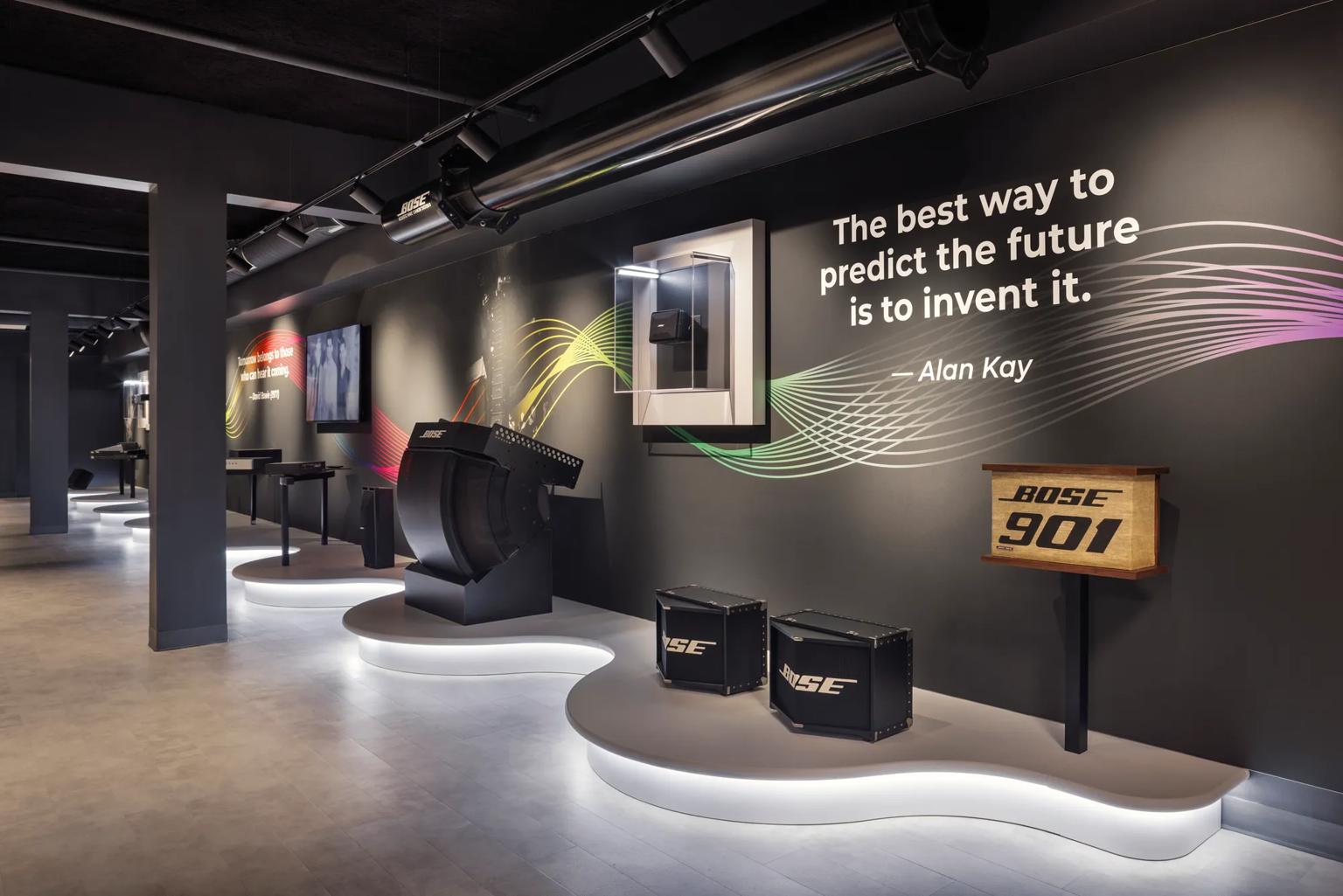
The next step was to apply those acoustic ideas in a form that fit into everyday environments. The Bose 901 did exactly that. Designed for home listening, it applied similar multi-driver principles in a form factor meant to blend into the modern living room, complementing the clean lines and minimalist aesthetic of the era.
Outside the home, the 901 found an unexpected following. Musicians and engineers began using it for portable PA and live sound, drawn to its even coverage and ability to maintain intelligibility across wide listening areas. Those real-world applications made one thing clear: the underlying approach had relevance beyond hi-fi, but it needed to be engineered specifically for sound reinforcement.
Bose Professional Is Born
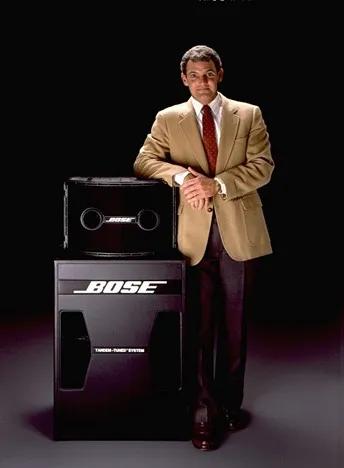
After seeing the 901 succeed in performance and reinforcement environments, Bose made a deliberate move into professional audio.
The first product to emerge was the Bose 800, a portable PA system built around eight 4.5-inch full-range drivers. Housed in a vinyl-wrapped wooden cabinet, the 800 was compact enough for musicians to transport while delivering balanced, full-range sound for small to medium venues such as clubs, schools, and houses of worship. A built-in amplifier provided power, while an active equalizer helped flatten its total radiated power response, improving consistency in real rooms. It was an early demonstration of integrating separate parts together into one system for a better user experience.
The 800 validated the multi-driver approach, but it also revealed its limits. While effective, there was room to improve efficiency, ruggedness, and long-term consistency — especially for installed applications where systems needed to behave predictably year after year.
Those lessons directly informed the next step.
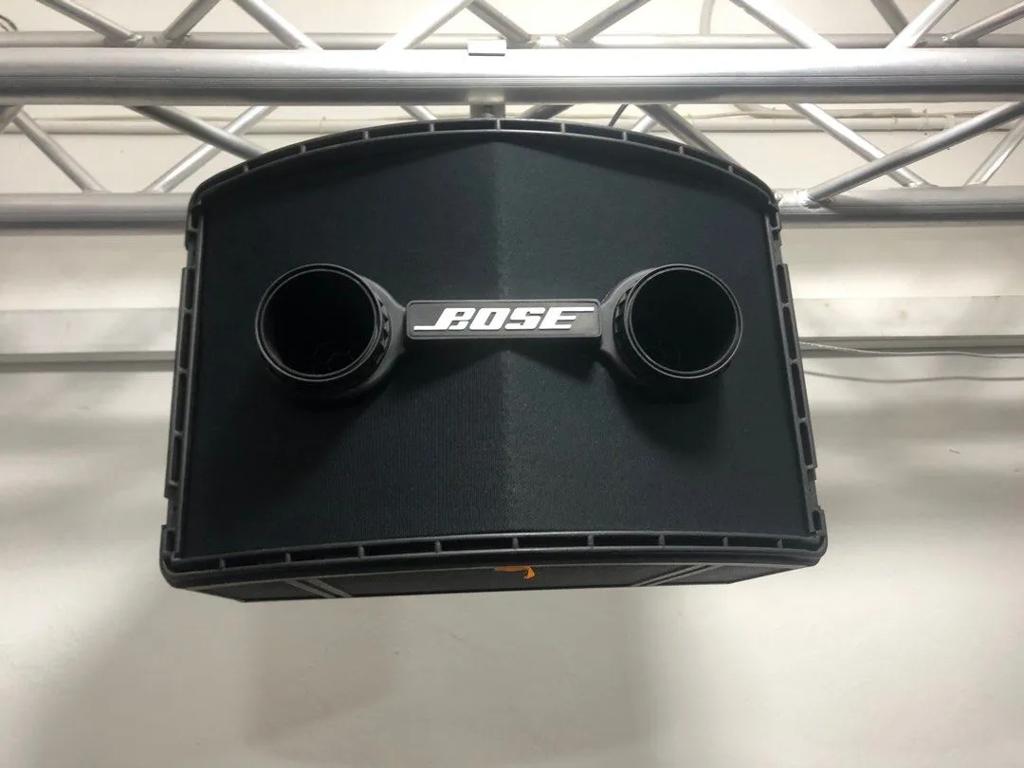
The Bose Professional 802, introduced in 1978, retained the multi-driver array concept but re-engineered nearly every detail for professional use. Driver construction was strengthened, efficiency increased, and mechanical durability significantly improved. The intent wasn’t novelty or experimentation; it was to create a loudspeaker that would perform consistently once installed and continue doing so under real-world conditions.
How Eight Small Drivers Changed the Equation
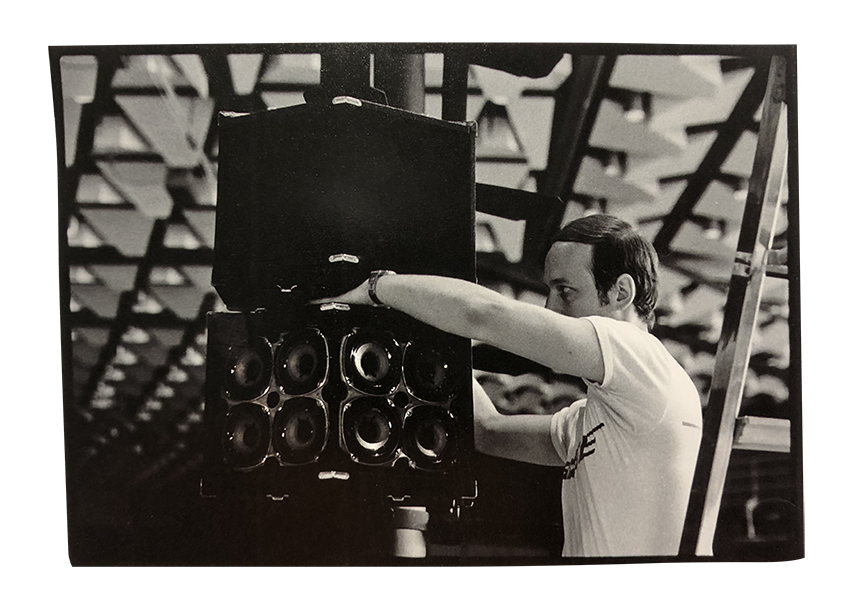
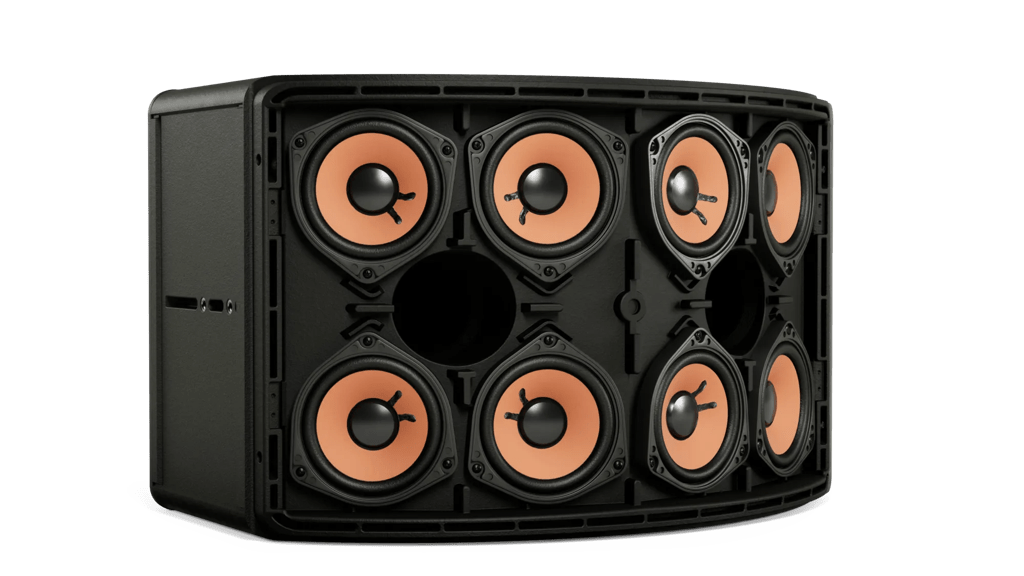
At the core of the 802 was a design choice that ran counter to prevailing professional loudspeaker practice of the time. Instead of combining large woofers, compression drivers, and complex crossover networks, the 802 relied on eight identical full-range cone drivers operating together as a single system.
This approach addressed several practical challenges at once:
- Eliminating traditional crossovers reduced phase-related artifacts and removed a common long-term failure point.
- Distributing the workload across multiple drivers increased power handling and reduced mechanical stress.
- Wide horizontal coverage meant fewer loudspeakers were required to cover a space, simplifying layout and installation.
The array geometry helped maintain tonal consistency across broad listening areas. For integrators, this predictability mattered as much as raw performance. It reduced the number of decisions required after installation and made outcomes easier to anticipate.
Built for Real-World Conditions
From the beginning, the 802 was engineered for environments that were rarely ideal. Restaurants, outdoor venues, portable systems, and permanent installations all shared the same realities: long operating hours, exposure to weather, vibration, and minimal tolerance for downtime.
Materials and construction reflected that reality. Driver frames were reinforced, motor structures designed for efficiency and durability, and enclosures built to survive conditions that would quickly degrade more delicate designs. Over time, the 802 earned a reputation for longevity.
User experiences reinforced that reputation. Owners routinely stacked 802s for larger events, deployed them outdoors without concern, and relied on them in installations where weather resistance and consistency mattered more than cosmetic perfection. For many, the loudspeaker became a well-known quality — something they could trust to behave the same way every time it was deployed.
That trust helped set a baseline expectation for professional loudspeakers: systems should keep working long after installation, not just on opening day.
Consistency Before System Design Was Formalized
Another lasting contribution of the 802 was how it enabled repeatability. Because coverage and voicing were consistent, designers could reuse the same approach across different spaces without rethinking every decision from scratch.
That consistency made it possible to scale systems across venues and expand installations while maintaining a familiar sound. Long before predictive modeling software and standardized design tools became common, the 802 helped make repeatable system design practical.
It was an early example of treating the loudspeaker not as an isolated component, but as part of a larger, predictable system.
Evolution Without Reinvention
As professional audio evolved, the 802 evolved alongside it. Power handling increased, materials improved, and weather resistance became more robust. Later designs expanded on the original philosophy, introducing smaller drivers, refined array geometries, and broader application coverage.
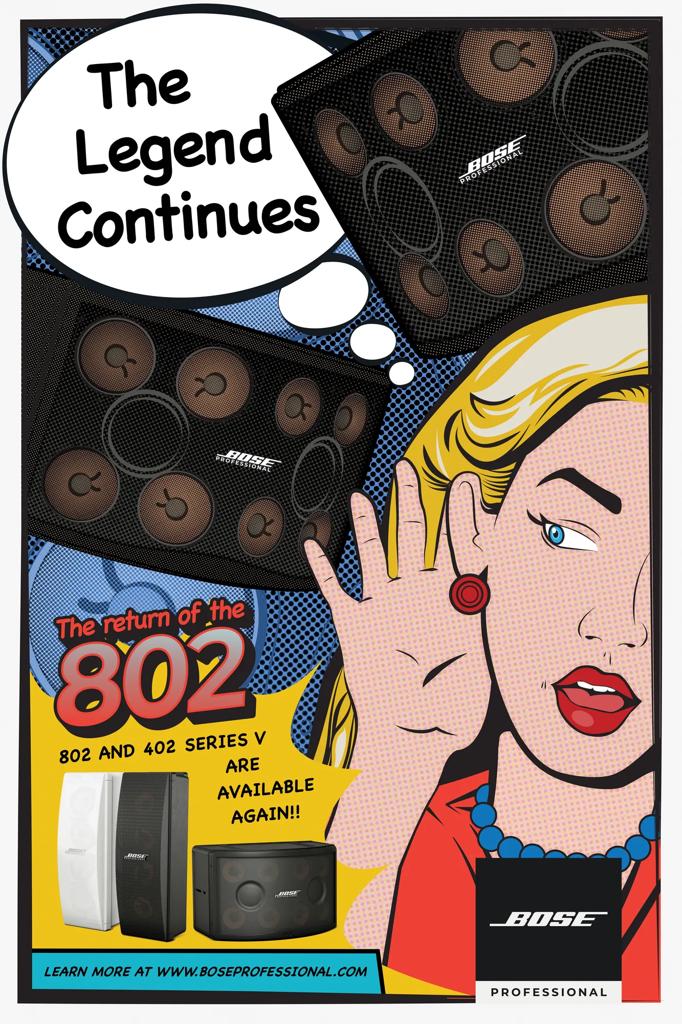
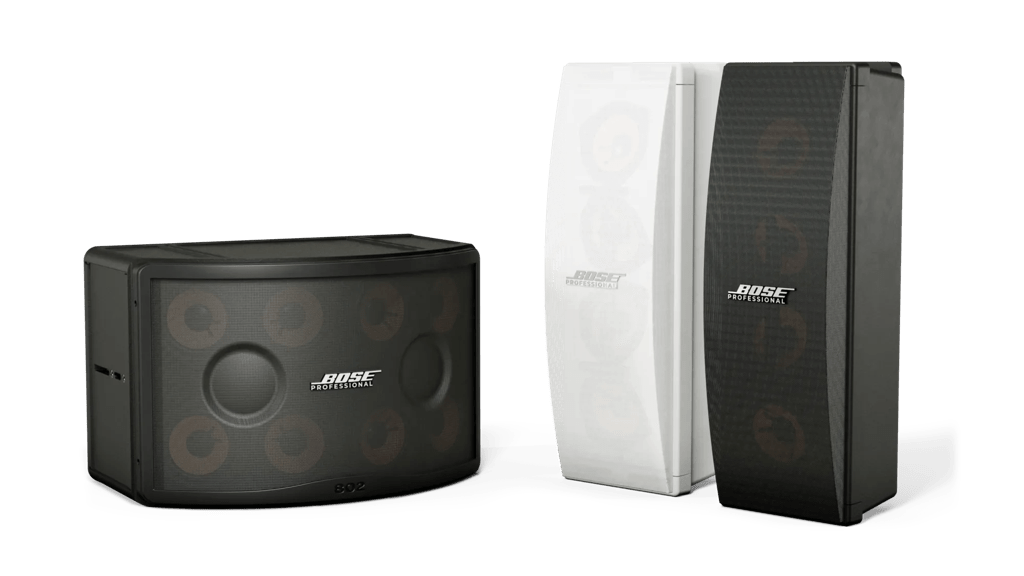
Most recently, the 802 Series V relaunch in 2024 modernized the original 802 design, with updated performance, modern manufacturing, and an IP55 rating that reflects how and where the loudspeaker is actually used today.
Contemporary installations — including high-profile hospitality projects like the JW Marriott — demonstrate that the 802 remains relevant not as a legacy artifact, but as a working solution.
What didn’t change across generations was intent. Each revision focused on improving durability, efficiency, and long-term performance rather than redefining the concept itself.
Why the 802 Still Matters
Today’s professional audio systems are more complex than ever. Networked audio, advanced DSP, modeling software, and integrated control platforms are now standard parts of system design. Yet the underlying challenges that integrators face remain familiar.
Rooms are still acoustically difficult. Coverage still needs to be even. Systems still need to perform consistently over long periods with minimal intervention. The 802 addressed those realities by starting with the field rather than the lab — by observing how systems were actually being transported, deployed, scaled, and maintained in real venues.
At its core, the 802 represented a customer-centered response to unmet needs. Integrators needed a way to reliably and efficiently scale sound systems for larger spaces. They needed components that worked together predictably. They needed enclosures that could survive transport, stacking, weather exposure, and long operating hours without becoming liabilities. The 802 answered those needs not with isolated features, but with a cohesive approach.
It also embodied system-level thinking. Rather than treating the loudspeaker as a standalone object, the 802 was designed in concert with its electronics, voicing, and equalization to operate as a unified system. Performance, consistency, and reliability were not afterthoughts layered on top of a product — they were engineered into the relationship between components. That mindset helped simplify deployment and made outcomes more repeatable long before system design workflows were formalized.
Just as importantly, the 802 treated reliability as an element of performance. A rugged enclosure, durable transducers, and attention to mechanical detail ensured that the loudspeaker sounded the same on day 1000 as it did on day one. In the real world, predictability is performance.
That philosophy continues to resonate. Listening closely to customers. Designing complete systems, not isolated parts. Engineering for longevity as much as output. The 802 was an early expression of a way of thinking that still guides Bose Professional today.
In that sense, the 802 remains more than a historical reference point. It represents a belief: that great professional audio isn’t defined only by innovation, but by how reliably that innovation serves the people who depend on it.
Technical Sidebar: Engineering Notes on the 802
- Eight identical full-range cone drivers operating without a traditional crossover
- Aluminum edge-wound ribbon voice coils for improved efficiency and heat dissipation
- Approximately 5 dB higher sensitivity than the earlier 800
- Heavier ceramic magnet structures for increased efficiency and control
- Glass-reinforced thermoplastic driver frames for mechanical durability
- Wide horizontal dispersion designed to reduce loudspeaker count in a space
This approach prioritized consistency, durability, and predictable field behavior — principles that continue to inform professional loudspeaker design.
Talk with our design team
If you’d like help reviewing your plans, modeling coverage, or selecting the best tools for your environment, our design support engineers are here to assist.