About the Project
Towson University — Designing Sound for Modern Healthcare Education
For the new College of Health Professions building, Bose Professional, Convergent Technologies Design Group, Visual Sound, and Towson University worked together to create classroom and auditorium audio systems that support a technology-forward, interprofessional learning environment.
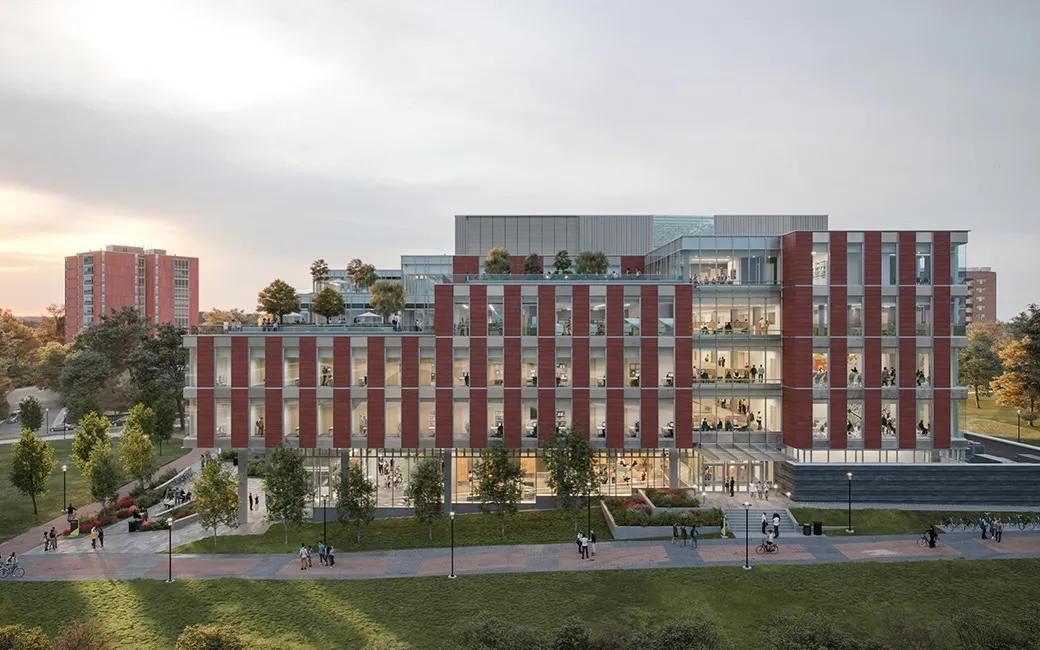
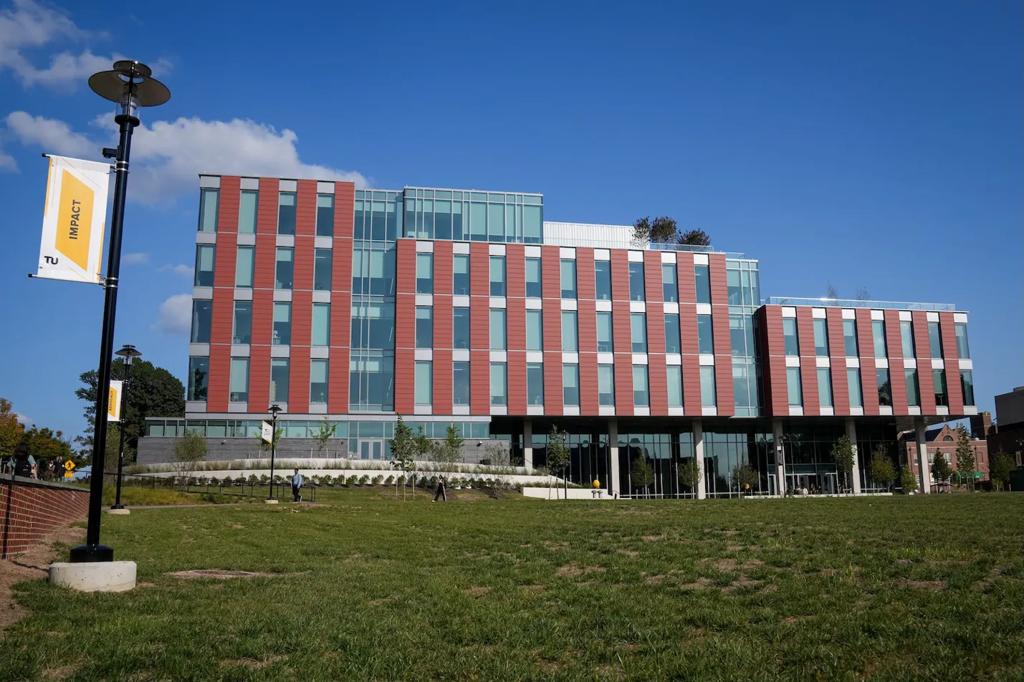
The new College of Health Professions building at Towson University was conceived as a purpose-built environment for how healthcare is taught today. The 240,000-square-foot facility brings together six departments — nursing, physician assistant, kinesiology, health sciences, speech-language pathology and audiology, and occupational therapy — within a single building designed around clinical training, collaboration, and real-world readiness.
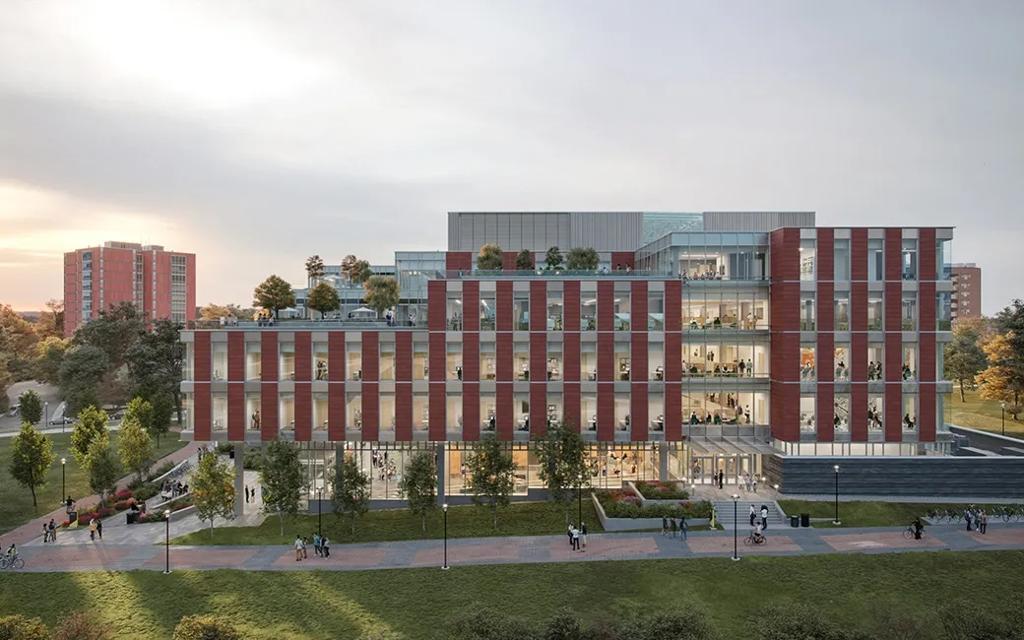
“The idea was to bring them all together under one roof,” says Dennis Shepard of Towson University. “Previously, many of those programs had been spread across campus, often utilizing older academic spaces that were never intended for contemporary health professions education. The new building offered us an opportunity to align architecture, pedagogy, and technology from the ground up.”
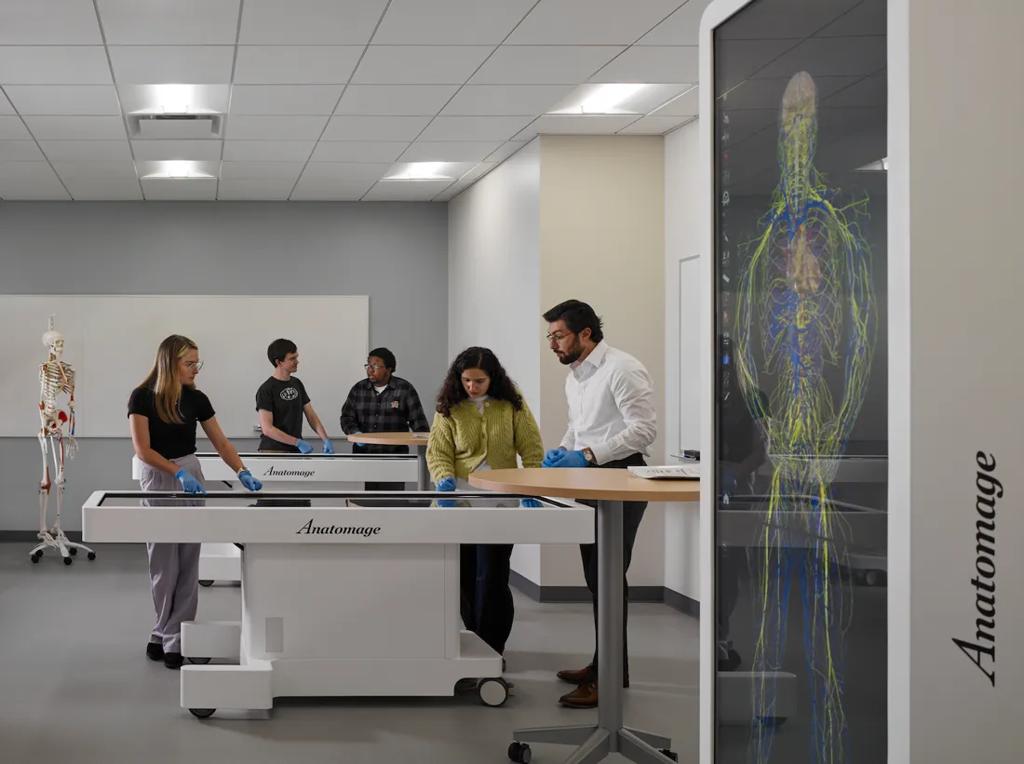
That ambition is visible throughout the building. Classrooms, specialty labs, and faculty spaces are organized around interprofessional learning, flexibility, and well-being. Simulation environments mirror clinical settings. Collaboration zones encourage interaction across disciplines. Natural light, rooftop gardens, and open gathering spaces reinforce the building’s human-centered design.
For Towson University, the project also carries broader significance. “Towson University is one of the biggest providers of healthcare professionals in the state of Maryland,” says Jamie Abell. “The way this building was set up prepares students to step out of Towson ready to do that job.”
Early stakeholder alignment helped set the direction
In a building shaped around communication, collaboration, and technology-enabled instruction, audio had to be treated as core infrastructure. In the classrooms, the goal was consistent intelligibility for lectures, discussions, multimedia, and lecture capture in rooms built for flexible teaching. In the auditorium, the goal was a system that could feel straightforward in everyday use while still supporting more advanced event production when needed. Those expectations helped define the project early and gave the team a clear standard for success from the user’s perspective.
To achieve those goals, the university turned to Convergent Technologies Design Group (CTDG), a leading consulting firm headquartered just a stone’s throw from campus. That proximity was matched by extensive experience in higher education environments and long-standing knowledge of Towson’s standards and working relationships, giving CTDG a strong foundation for guiding the audio design early in the process.
“Each time one of these campuses has a capital project like this, it’s a real opportunity,” says Paul Corraine, Managing Principal and Founder of CTDG. “It could be a once-in-a-lifetime moment for the teams involved to create an enduring legacy, so they have one chance to get it right.” When it came to the audio system, that meant reducing the risk of rework, coordinating across disciplines, and developing standards the university could support over time. “We take it really seriously when we’re establishing these standards,” Paul adds, “thinking along the lines of a technician going from building to building and seeing the same type of equipment as a standard.”
Classroom audio that supports flexible teaching and hybrid learning
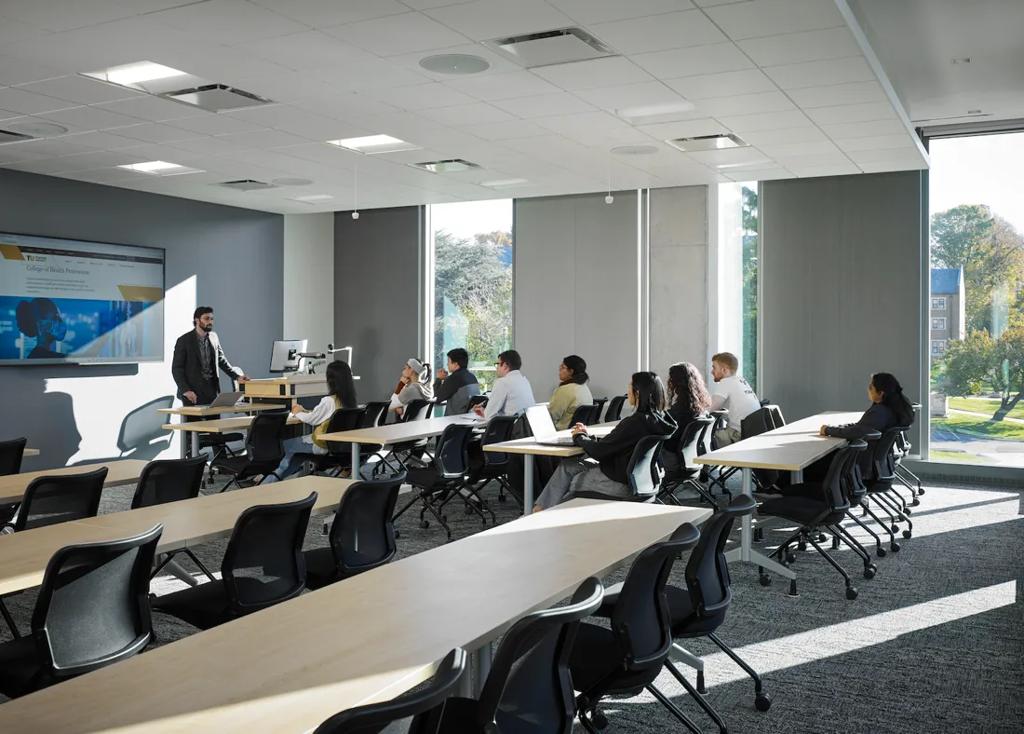
Across the classroom wing, the instructional model is deliberately flexible. Many rooms include multiple displays for small-group work. Furniture can be reconfigured. Video conferencing and lecture capture are part of everyday teaching rather than specialty functions.
In those spaces, intelligibility directly affects how instruction is delivered and understood.
“Audio is a very important aspect of this building,” says Brian J. Raley, Manager of Engineering, Projects & Service at Towson University. “All of the classrooms have cameras and microphones for video conferencing and lecture capture, and the audio experience is even more important than video in most cases.”
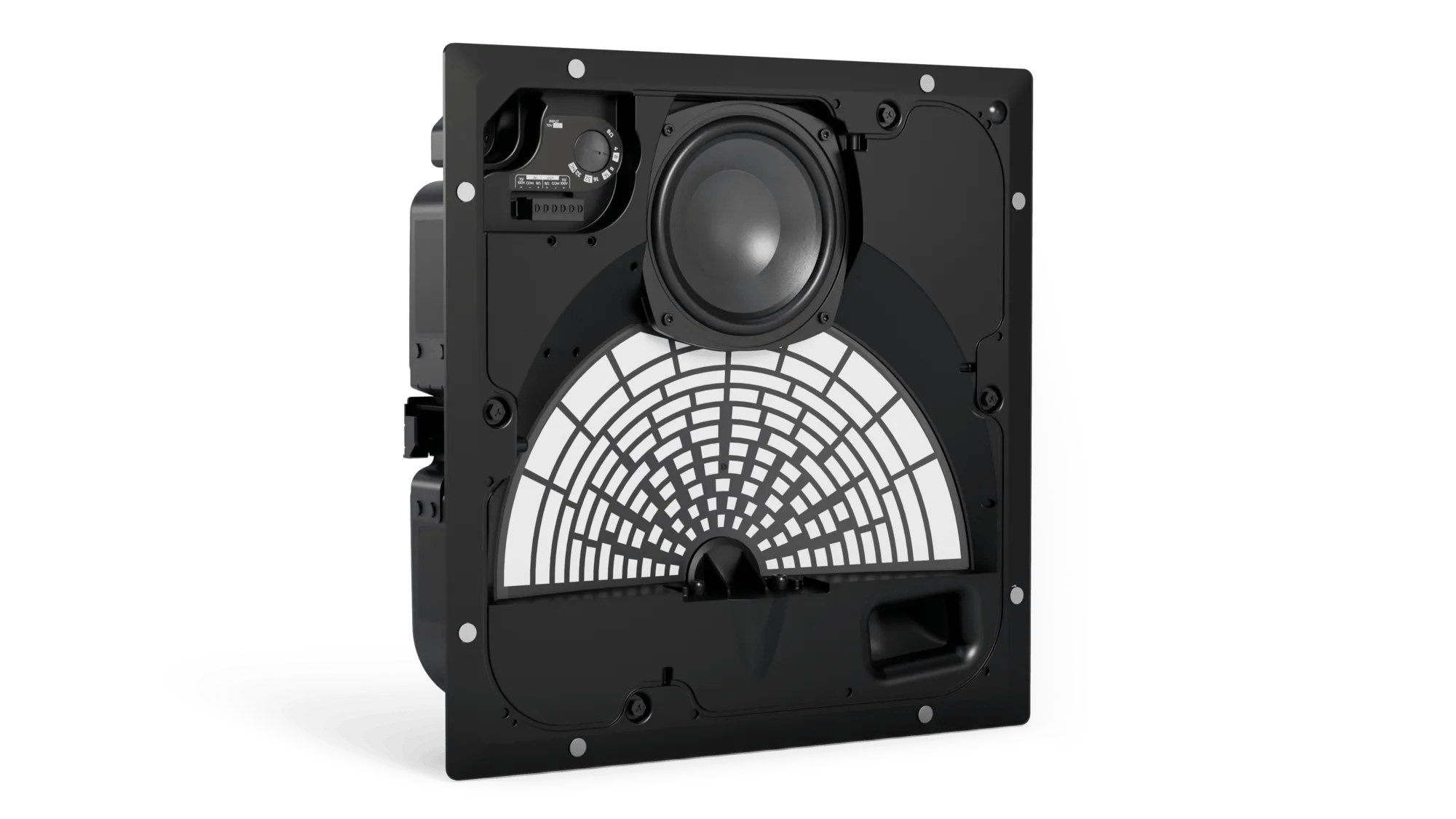
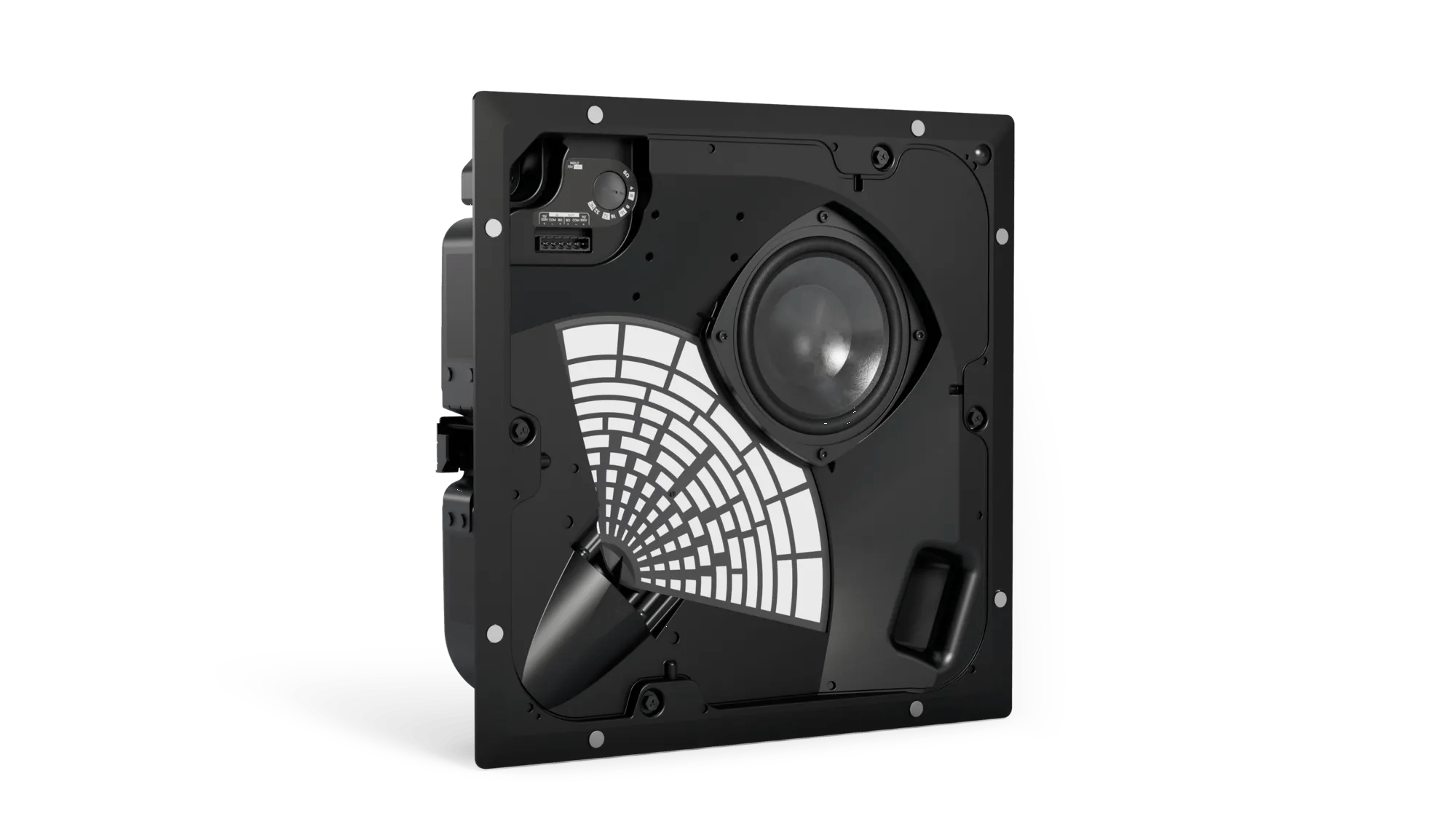
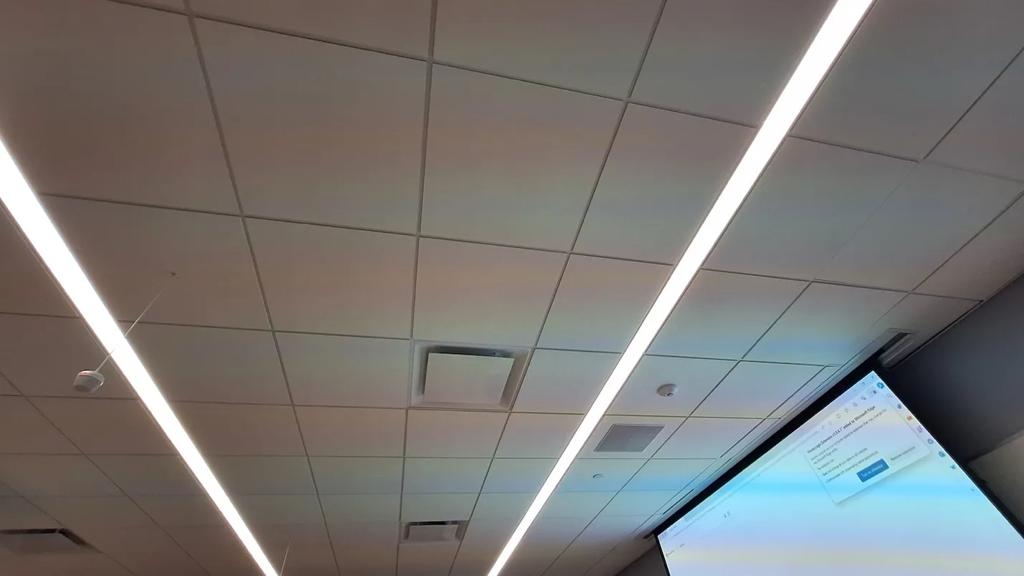
That priority shaped the design approach. Convergent Technologies specified Bose Professional EdgeMax loudspeakers throughout most of the classrooms because the rooms needed even, intelligible sound without forcing the ceiling plan into a rigid configuration. Keeping loudspeakers out of the middle of the ceiling also made coordination easier as lighting, structure, and other systems evolved.
By locating directional loudspeakers along the perimeter rather than relying on a more conventional overhead layout, the design preserved valuable coordination space while maintaining consistent coverage throughout the room. “The EdgeMax loudspeakers really allow for that level of flexibility in the space,” says Alexander Good, Project Manager and Lead AV Designer at Convergent Technologies. “With EdgeMax we’re able to fill the room with consistent, intelligible sound without needing loudspeakers directly over every seating position.”
That mattered in rooms built for active learning, where instructors move freely and students shift between lecture, discussion, and group-based work. Peter Morin, Director for Simulation and Clinical Education Technologies in the College of Health Professions, points to the result in practical terms. “We’ve noticed a clear improvement in audio quality compared with our previous facilities,” he relates. “In our old building, sound coverage could be inconsistent depending on where students were seated. In the new classrooms, audio for both voice reinforcement and played content is much clearer and more evenly distributed throughout the room, making it easier for students to hear faculty, classmates, and multimedia during lectures and discussions.”
Towson had already used Bose Professional loudspeakers in selected spaces elsewhere on campus and extending that standard into the College of Health Professions helped create a more consistent experience for both end users and support staff.
An auditorium designed for flexibility and performance
If the classroom strategy centered on flexibility at a smaller scale, the auditorium required the same principle to operate in a larger and more visible setting.
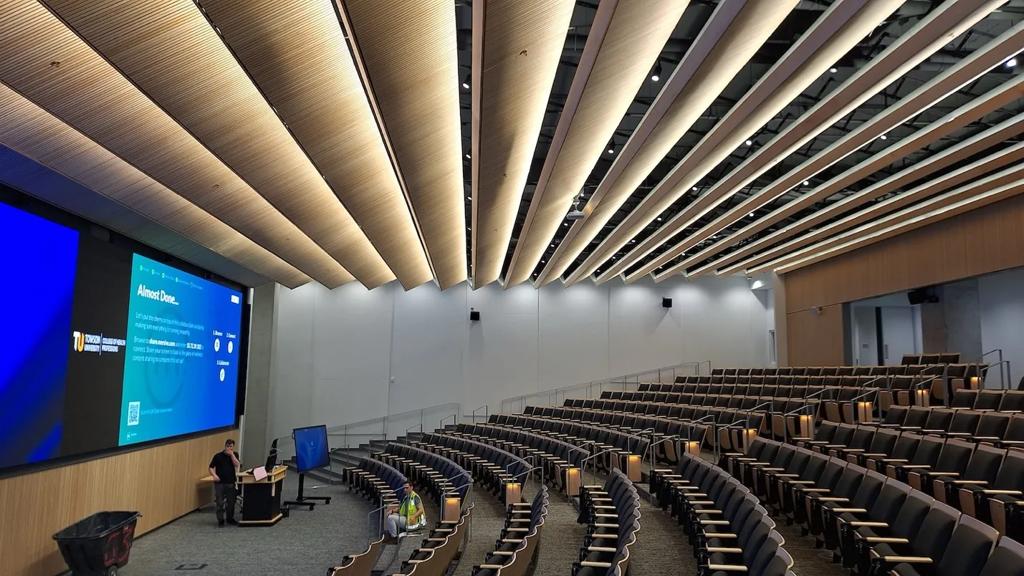
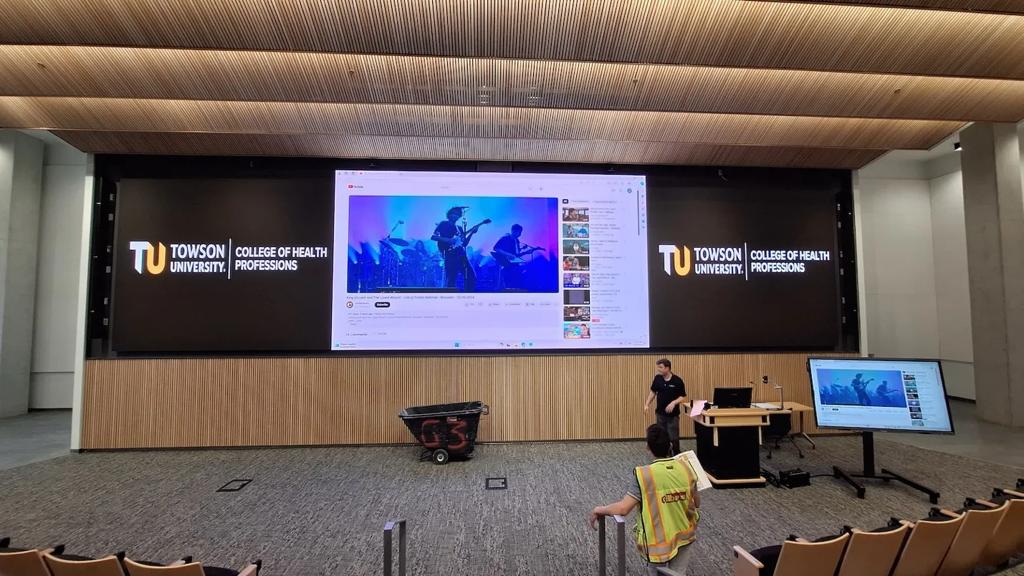
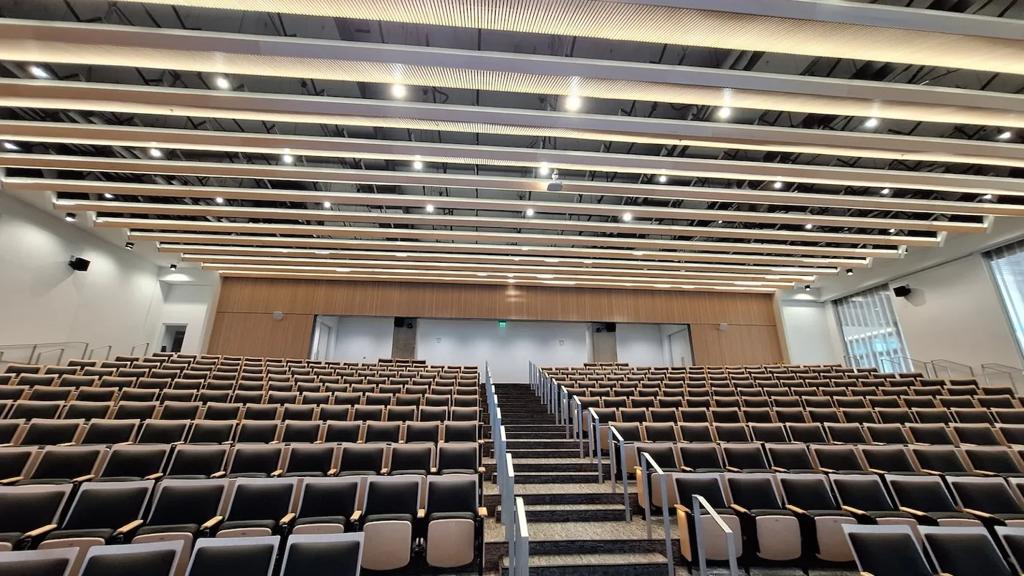
The 350-seat room was designed as a campus destination rather than a traditional scheduled classroom. It hosts guest speakers, college events, campus-wide programs, and multimedia presentations, and includes a large direct-view LED video wall that expanded the range of formats the room needed to accommodate.
“The auditorium is a unique use case since regular classes are not scheduled in this space,” Raley explains. “It’s specifically for special events both for the College of Health Professions and the campus as a whole. Therefore, the audio system had to be able to handle a diverse set of applications.”
Those uses range from straightforward speech reinforcement to film screenings and more advanced presentations. “A client can come in and use the system the same way they would a classroom and control the system from touch panel on the instructor podium,” he says. “Or an entire event can be run in an advanced ‘production mode’ out of the control room in the rear of the space.”
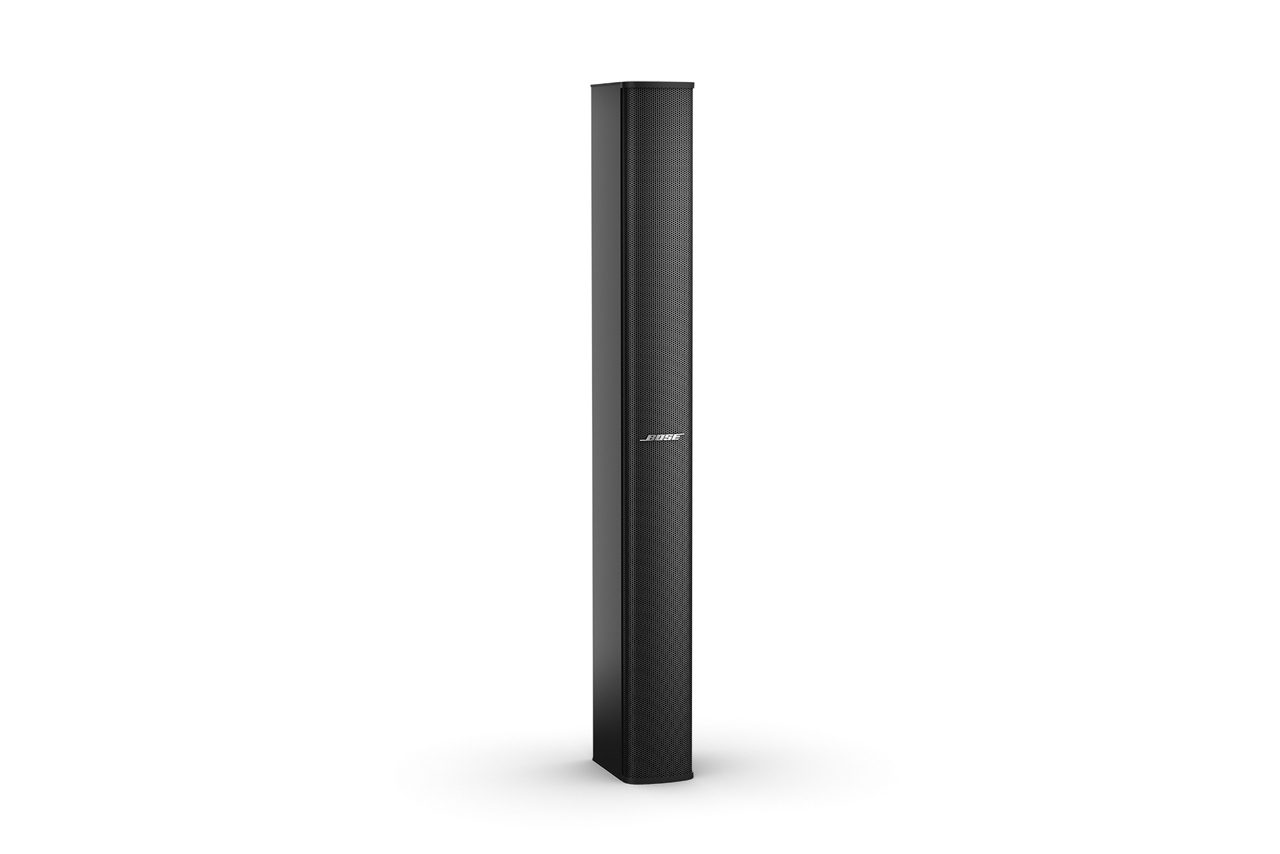
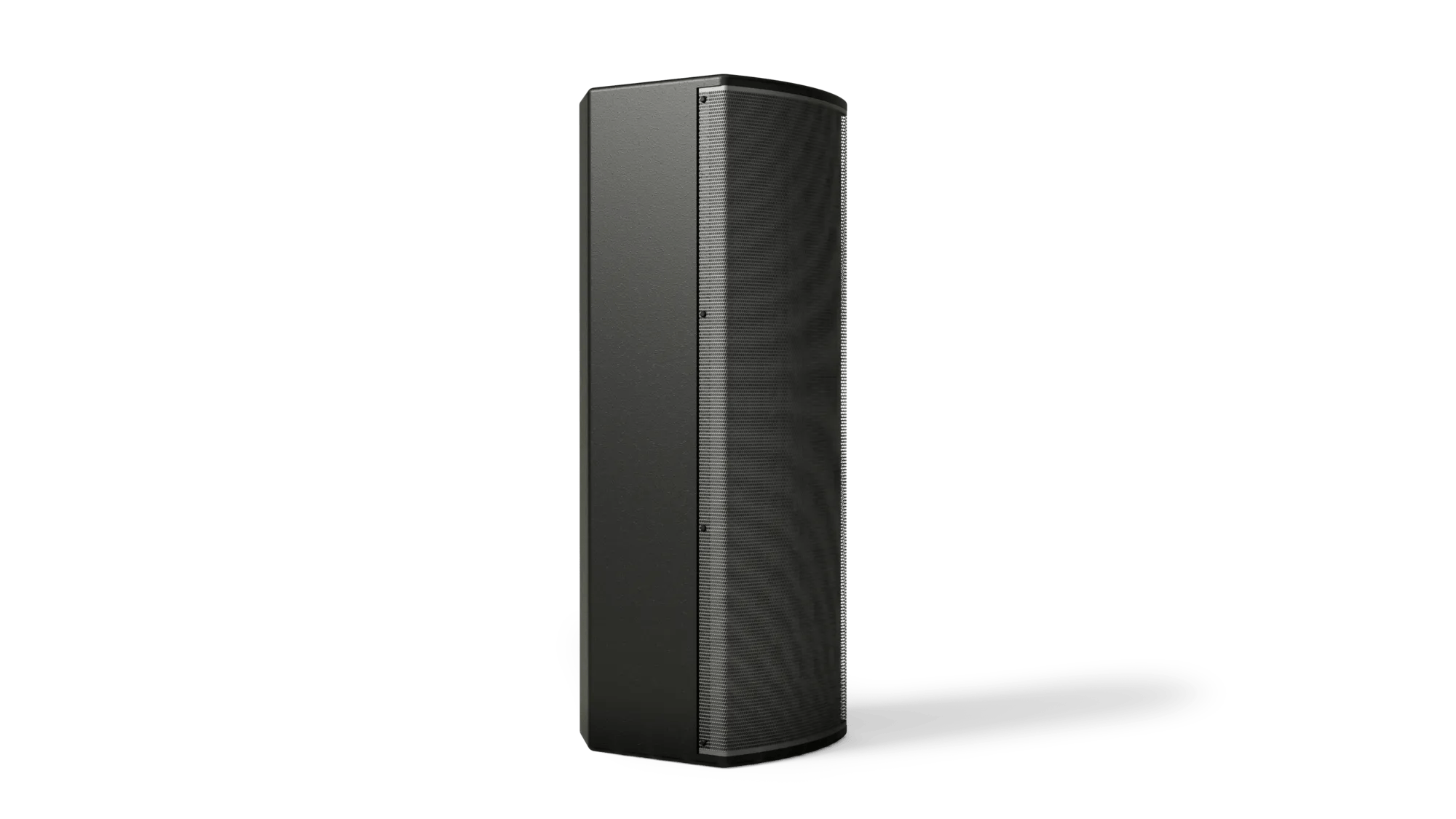
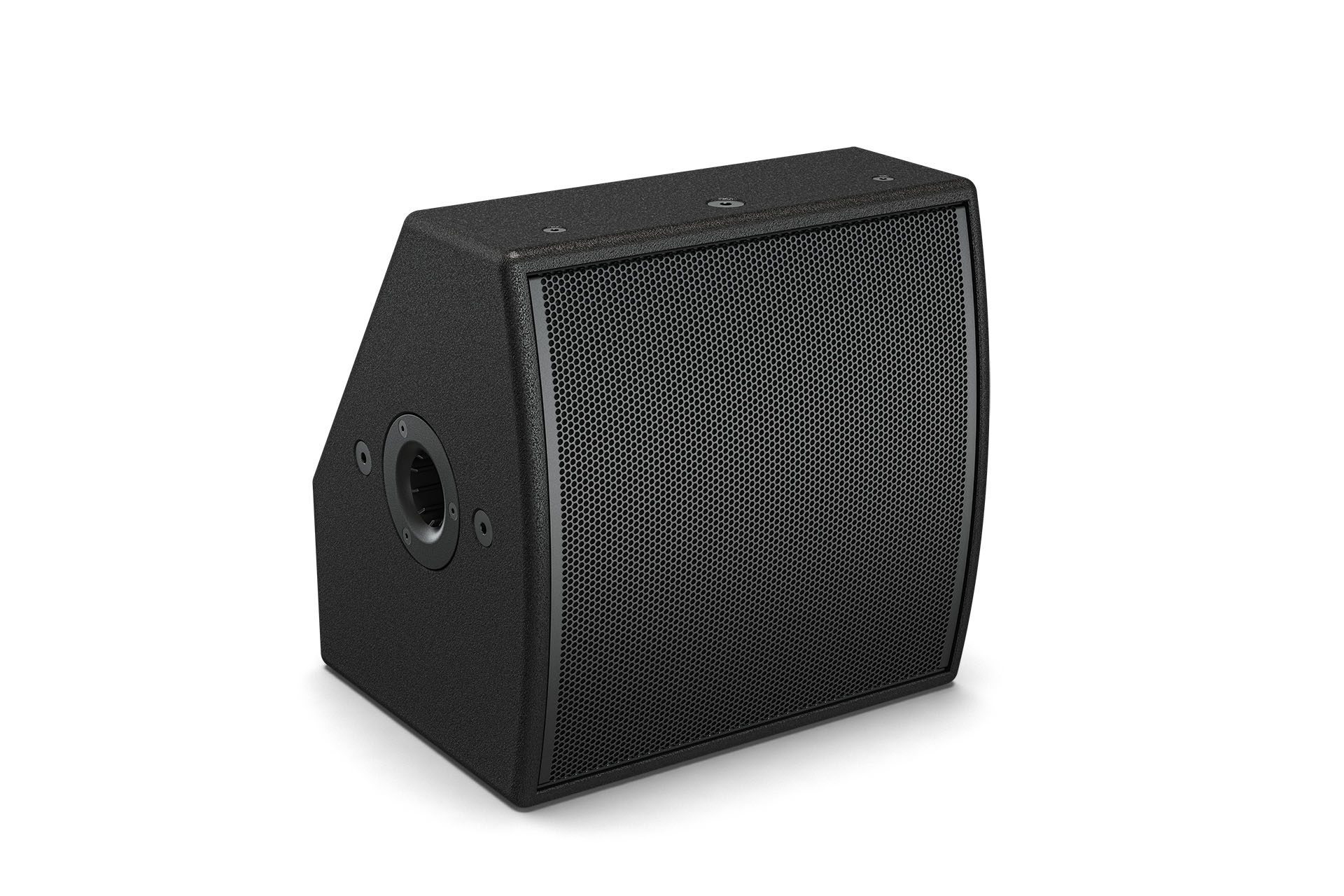
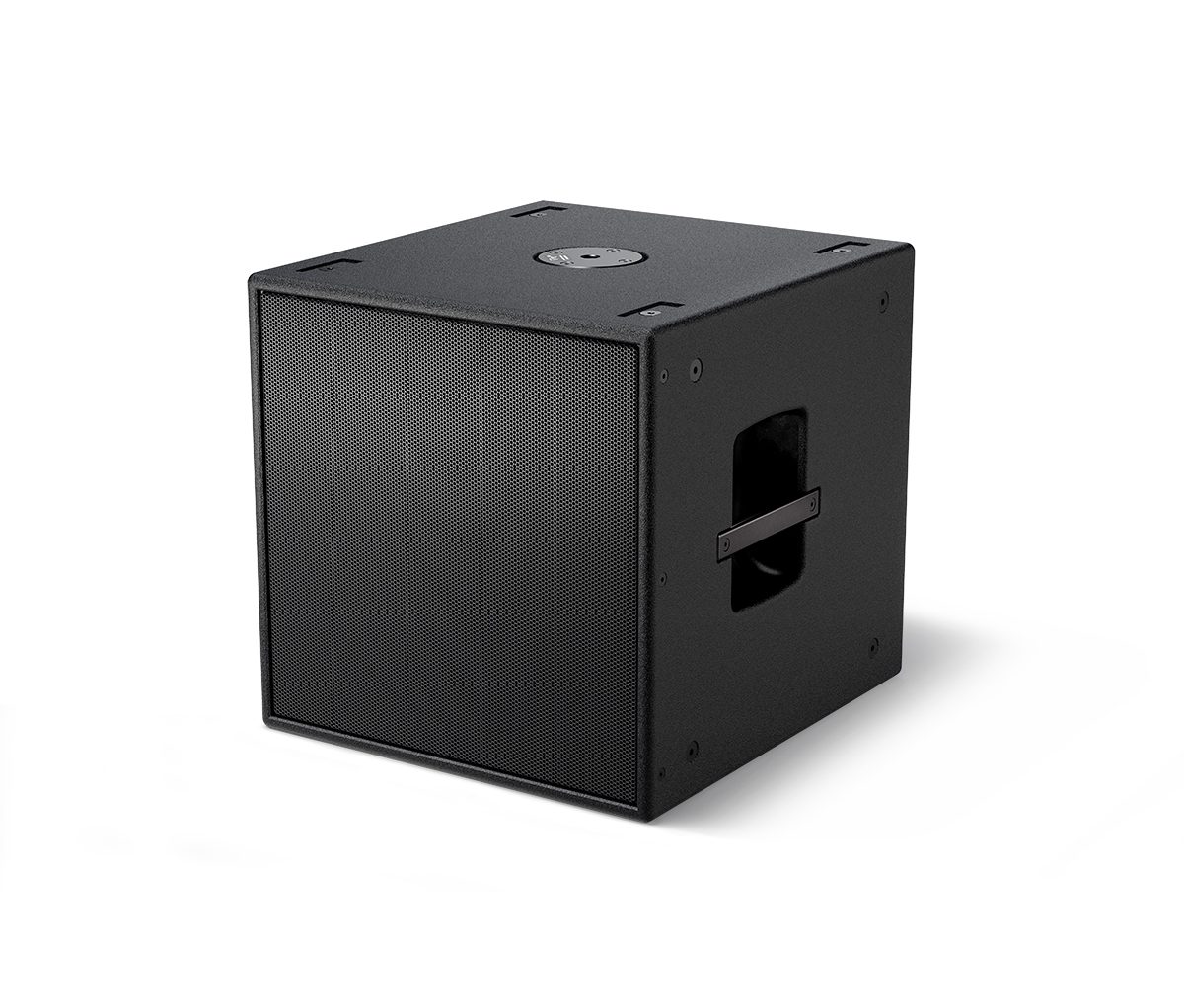
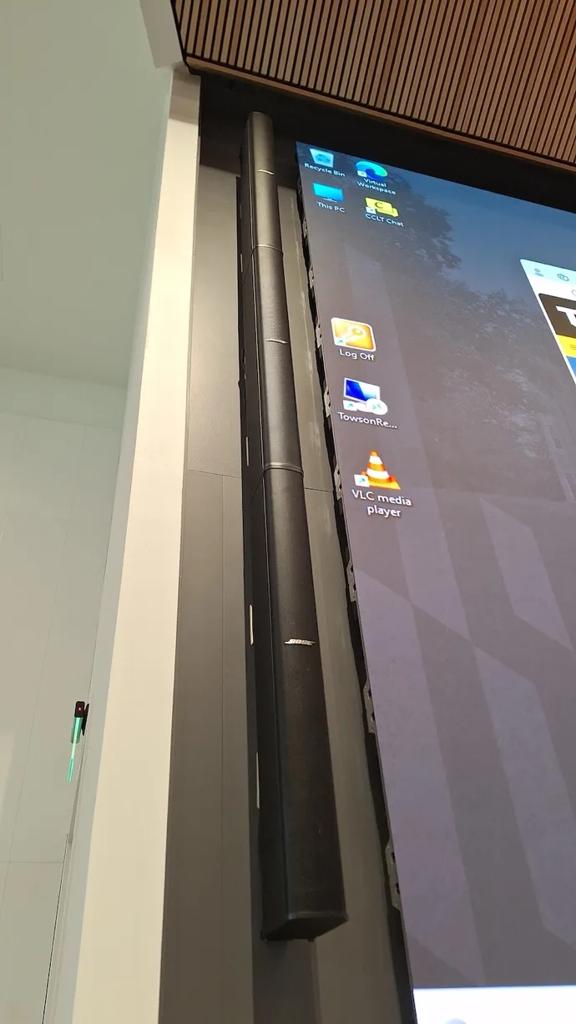
Convergent Technologies developed the auditorium system around six Bose Professional MSA12X digitally steerable column arrays, configured as three units per side in a left-right arrangement. Supporting elements include an AMU208 center fill, AMM108 loudspeakers for side fill and surround coverage, and AMS115 subwoofers for low-frequency support.
The auditorium’s proportions and seating layout called for a more controlled approach. “Because of the width of the room in relation to its depth and also the raked seating, we wanted to go with steerable column arrays,” says Good. The MSA12X arrays allowed the design team to direct sound toward the audience while reducing unnecessary energy on room surfaces, giving the room the control needed for speech-driven events and the headroom required for more immersive content.
Coordinating audio with architecture
The auditorium’s performance goals were only part of the challenge. The room is anchored by a large-format LED video wall, and the front wall required a high degree of visual discipline.
That made coordination with Perkins&Will, in association with JMT, especially important. Convergent Technologies had worked with Perkins&Will for more than two decades on similar projects, and that history contributed to the level of trust and responsiveness required here.
Loudspeakers had to integrate cleanly with the front wall composition rather than appearing as add-on elements around the display. The solution involved recessing and aligning key components so the visual plane remained cohesive, while center-fill and low-frequency elements were concealed behind acoustically transparent materials. The process required attention to both performance and appearance.
That same coordination mindset carried into the classroom strategy. Keeping loudspeakers out of the center of the ceiling simplified interdisciplinary coordination and left more room to work around other systems as the design evolved.
A project made stronger through collaboration
One of the clearest themes to emerge from Towson’s perspective is that the success of the project began with early collaboration and clear communication.
“Having the Office of Technology Services involved from the very beginning of the project was key to making this project successful,” says Raley. “We were able to review project documents and provide feedback on the design prior to the start of construction, which allowed ample time to incorporate any adjustments. The free flow of information from the beginning allowed the AV consultant and AV contractor to design and install the spaces in accordance with our campus standards.”
That early alignment helped ensure that the final design reflected not only the ambitions of the architect and consultant, but also Towson’s operational standards and long-term support needs.
The collaboration gave the project continuity from planning through implementation. Convergent Technologies translated institutional priorities into system design and documentation. Visual Sound brought extensive campus familiarity from prior work at Towson. Bose Professional contributed product support and design coordination. The architect established the broader spatial and visual framework into which the systems had to fit.
“The close collaboration between Towson University, Convergent, Visual Sound, and Bose Professional was essential to making sure this project was a success,” says Raley. “The frequent communication between all parties and escalation of any questions or issues that arose during the process ensured the building met the needs of the college.”
Setting direction for future projects
The College of Health Professions now serves as a flagship academic building within Towson University because its infrastructure is closely aligned with its purpose.
Classrooms support collaborative teaching, lecture capture, and video conferencing with greater consistency. The auditorium accommodates a wide range of events while remaining easy to operate at different levels of complexity. Together, those spaces support an educational model that depends on communication, adaptability, and clear technology workflows.
The building has also influenced how Towson thinks about future development. “This building was the first for some new technologies for us, such as the use of direct view LED video walls, which have already made their way to other locations on campus,” says Raley.
The College of Health Professions established an approach that can be carried forward: involve stakeholders early, design around real patterns of use, coordinate technology closely with architecture, and build systems that remain adaptable over time.
In a facility built around contemporary healthcare education, the audio environment supports instruction, collaboration, and communication across every space. It operates as part of the building’s larger system — aligned with how the university teaches today and prepared for how that work will continue to evolve.
System Components
- (6) MSA12X steerable column arrays
- (1) AMU208 loudspeaker for center fill
- (6) AMM108 loudspeakers for side-fill and surround coverage
- (2) AMS115 subwoofers
- EdgeMax directional ceiling loudspeakers throughout the majority of classrooms
- Additional ceiling loudspeakers in select larger classrooms to extend coverage through the center of the room
Integrator
Visual Sound is a long-time AV integration partner for Towson University, with deep familiarity with the campus, its standards, and its day-to-day operational needs. For the College of Health Professions project, that continuity helped carry the design into implementation with a clear understanding of how the university supports and uses its learning spaces.
Consultant
Convergent Technologies Design Group (CTDG) is a Towson, Maryland-based AV, acoustics, and low-voltage design firm with extensive experience in higher education. For the College of Health Professions building, CTDG helped guide the audio strategy early in the process, bringing long-standing familiarity with Towson, close working relationships with the design team, and a focus on coordination, usability, and long-term support.
Featured Components
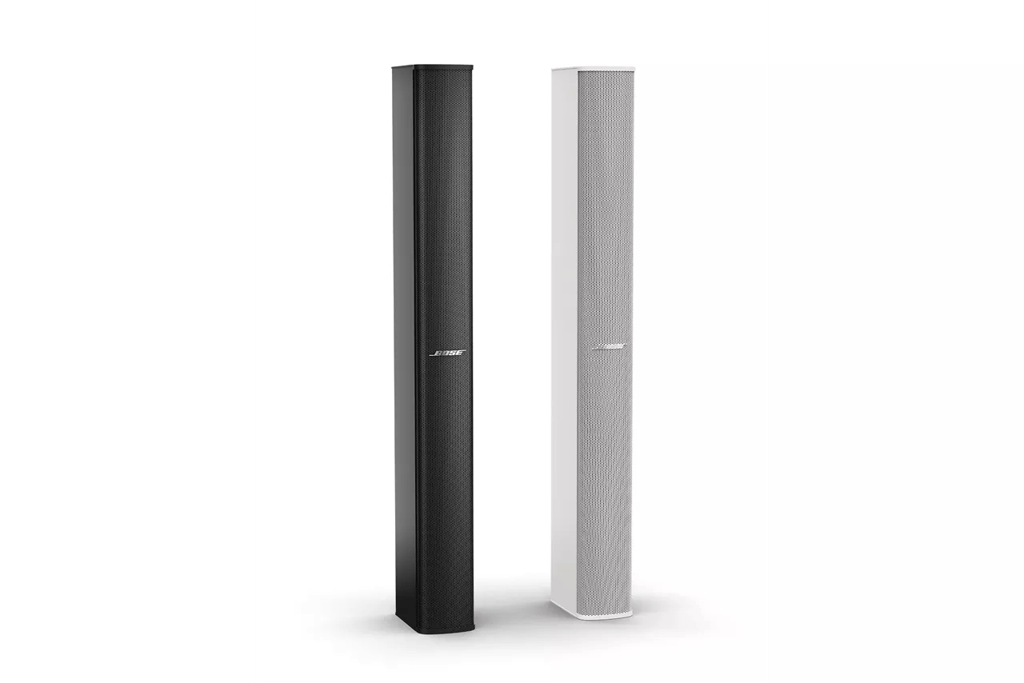
MSA12X Steerable Column Arrays
Digitally steerable column arrays for the auditorium’s wide footprint, raked seating, and limited front-wall mounting positions. Controlled vertical coverage helped direct sound toward the audience.
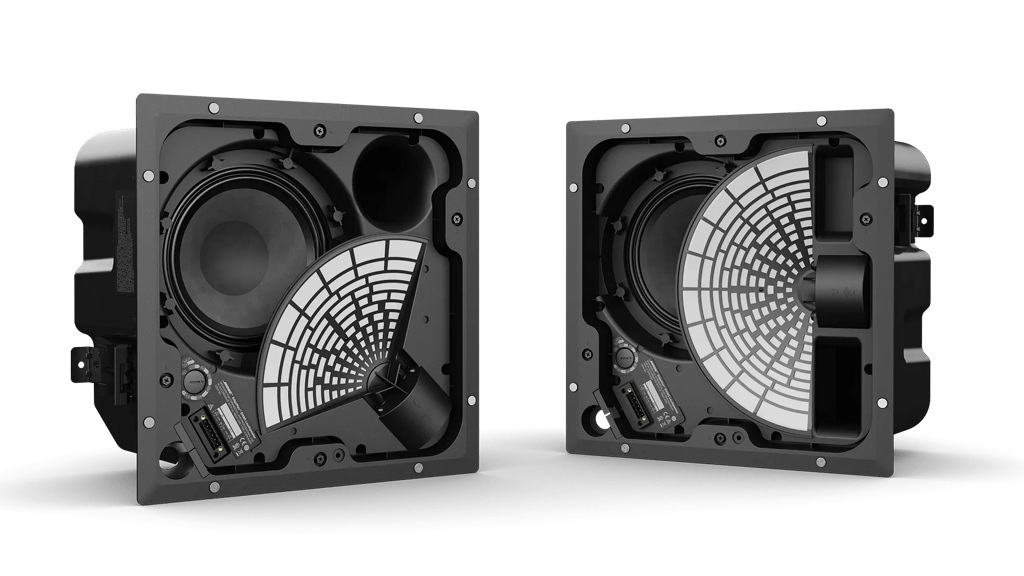
EdgeMax Directional Ceiling Loudspeakers
Directional ceiling loudspeakers used throughout most classrooms to provide even, intelligible coverage while keeping the center of the ceiling open for coordination with lighting, structure, and other systems.
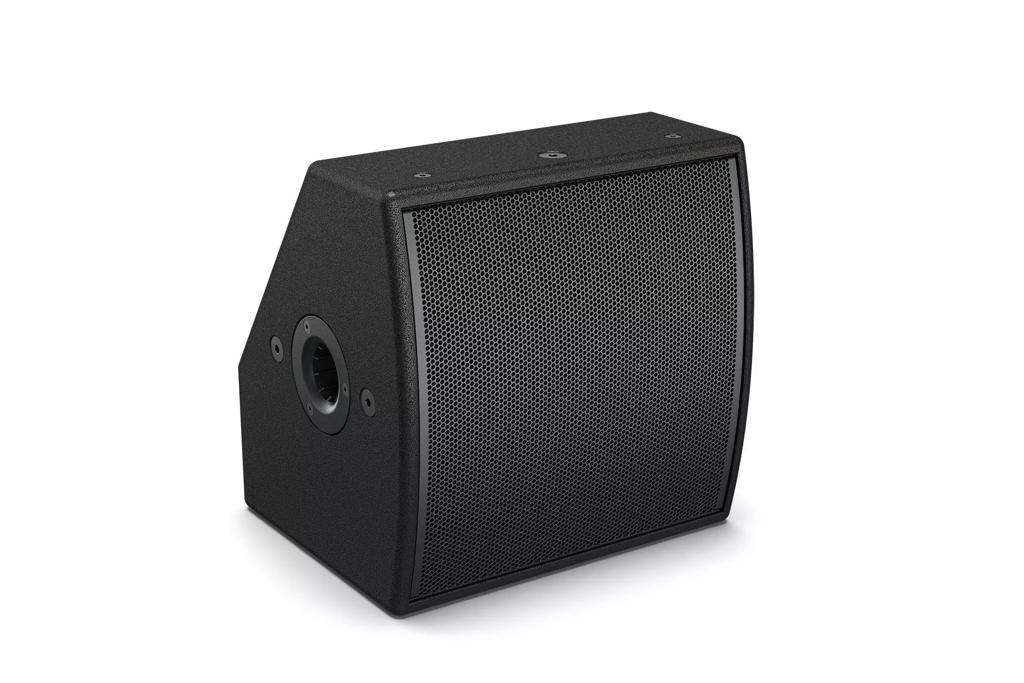
AMU208 and AMM108 Loudspeakers
Loudspeakers used to complete the auditorium system with center-fill, side-fill, and surround coverage. These elements helped extend intelligibility and maintain coverage across a room designed to support both speech reinforcement and more immersive presentation formats.
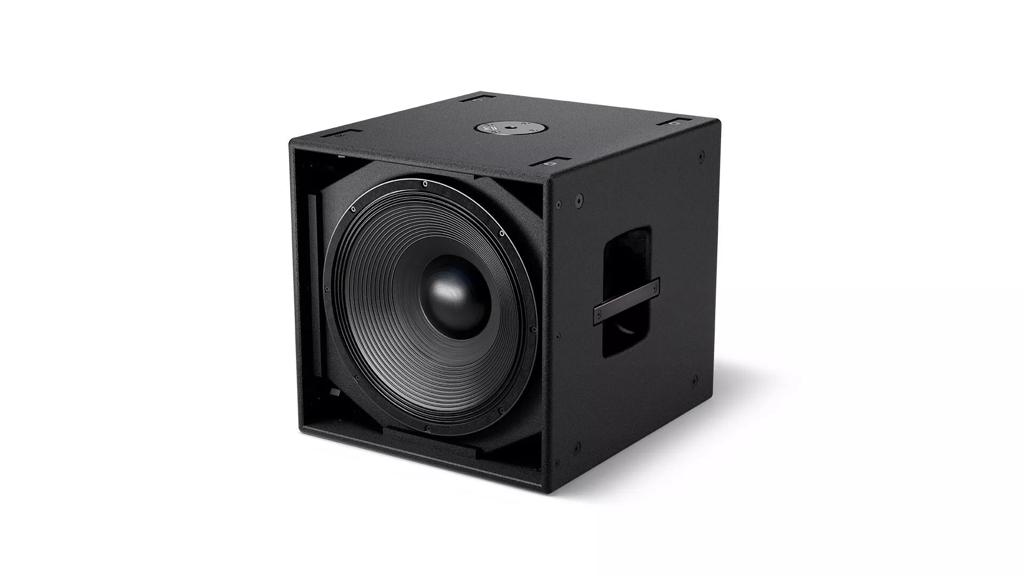
AMS115 Subwoofers
Subwoofers included to provide the low-frequency support required for multimedia content and event use in the auditorium, complementing the steerable array system while keeping the room capable of handling a broad range of applications.